
Magnitude-7.1 tremor damages buildings and transport networks across Kyushu; aftershocks and landslides remain a concern
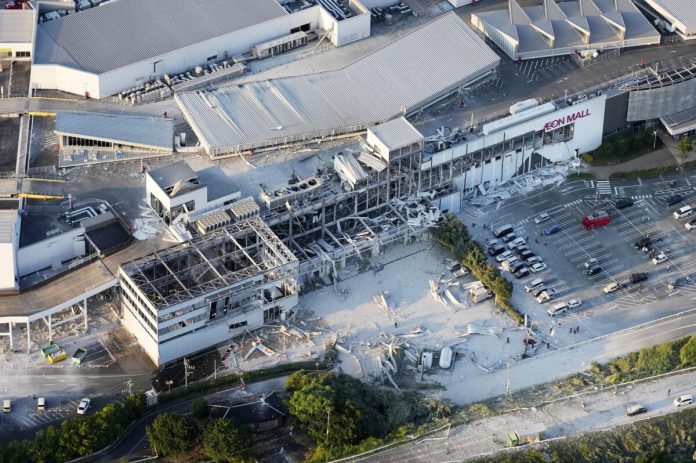
TOKYO, July 29, 2026 — Emergency crews worked through the night in southern Japan after a powerful earthquake struck Kumamoto prefecture, damaging buildings, cutting electricity and leaving people trapped inside a partially collapsed shopping centre.
The Japan Meteorological Agency measured the earthquake at a preliminary magnitude of 7.1. The U.S. Geological Survey issued a lower measurement of 6.8, a difference that can occur because the agencies use separate monitoring networks and calculation methods. The earthquake reached the highest level—seven—on Japan’s Shindo seismic-intensity scale.
One person had been confirmed dead and more than 100 people were reported injured in subsequent updates. Rescue operations were concentrated at the Aeon Mall in Kashima, where part of the building collapsed following an explosion possibly connected to a gas leak. The precise number of people still missing remained unclear as different authorities released changing figures.
A chimney also collapsed at a Nippon Paper Industries facility in Yatsushiro, trapping or injuring workers. Several houses and other structures were damaged, while fires and large cracks were reported on roads and bridges.
Authorities instructed approximately 300,000 people to move to evacuation centres. About 3,600 military personnel and emergency workers were deployed, while tens of thousands of households temporarily lost electricity. Bullet trains and other rail services were suspended, flights were disrupted and a freight train reportedly derailed.
TSMC, Sony, Honda and other manufacturers evacuated employees or temporarily suspended some operations. TSMC later said its Kumamoto semiconductor facility was gradually resuming work.
A tsunami advisory issued immediately after the earthquake was withdrawn within approximately two hours. Japan’s nuclear regulator reported no abnormalities at nuclear facilities in the affected region.
The Japan Meteorological Agency warned residents to remain alert for significant aftershocks and landslides, particularly in areas where the earthquake weakened slopes and structures.
Why it matters: Kyushu is an important centre for Japan’s semiconductor, automotive and industrial sectors. Apart from the humanitarian consequences, prolonged factory and transportation disruptions could affect international supply chains.