
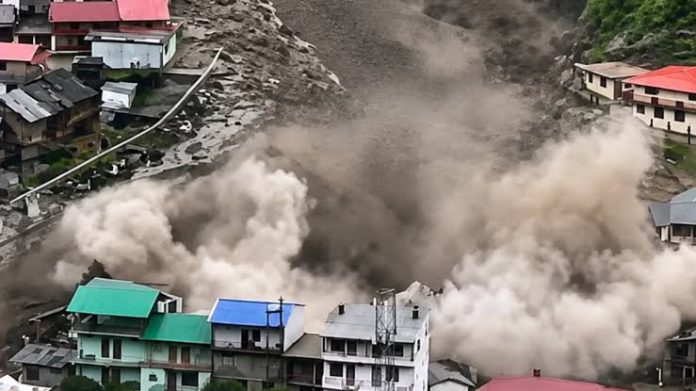
A catastrophic flash flood triggered by a glacier collapse in Tibet has caused widespread destruction across communities near the Nepal–China border. Authorities reported on August 27 that more than 160 people had died, while over 1,300 remained unaccounted for.
The disaster struck mountainous areas used by local residents, construction workers, international tourists and pilgrims travelling toward Mount Kailash. Floodwater and mud swept through settlements, damaging homes, roads, bridges and other essential infrastructure.
Nepalese police reported at least 165 fatalities and 826 missing people on their side of the border. In Tibet’s Gyirong County, Chinese state media reported three deaths and 558 missing. Officials cautioned that the numbers could change as rescue agencies reconcile information from isolated locations.
Foreign nationals constitute a significant proportion of those missing. Nepal’s tourism authorities listed 517 missing foreigners, including 179 Indian citizens, 65 Americans, 51 Malaysians, 35 Australians, 33 British nationals and 25 Canadians. Many were reportedly visiting the region for trekking or religious pilgrimage.
Emergency personnel from Nepal and China are conducting search-and-rescue operations, but unstable terrain, damaged roads, heavy debris and difficult weather conditions are restricting access to several affected areas.
The disaster has also renewed concerns about climate-related risks in the Himalayas. Scientists have repeatedly warned that rising temperatures can destabilize glaciers and increase the danger of sudden floods in downstream communities