
AdvertisementIn the eye of the storm over alleged large-scale irregularities and deletion of 13 crore voters during the Special Intensive Revision (SIR) of electoral rolls, the Election Commission on Monday “unanimously” denied before the Supreme Court any wrongdoing in its decisions.
Refuting the petitioners’ allegations, the poll panel submitted that all three orders concerning the SIR—dated June 24, 2025, October 27, 2025, and May 14,
In an affidavit filed in response to petitions filed by one Rakesh Kumar Singh seeking suspension of the SIR exercise pending final adjudication of the issue by the top court and restraining Gyanesh Kumar from functioning as CEC, the Commission said the petition was not maintainable as it was solely based on news reports.
However, it acknowledged that the manner in which the declaration was displayed on the online application platform could give the impression that Form 6 had been amended.
To address the issue, from October 21, 2026, the online application process would be divided into two separate components: Form 6 and the SIR declaration, in line with the procedure followed for physical applications, it said.
The declaration was introduced to facilitate the mapping of applicants with earlier electoral rolls and that the changes did not amount to an amendment of the statutory form, it clarified.
The Supreme Court earlier said that it did not adjudicate upon the new Form 6 while hearing cases related to the SIR of electoral rolls in Bihar which was upheld by it on May 27.
A Bench led by Chief Justice of India Surya Kant will on Tuesday take up the petition filed by Singh and Congress leader Rahul Gandhi and other Opposition leaders, including AIMIM leader Asadudding Owaisi, against Chief Election Commissioner Kumar.
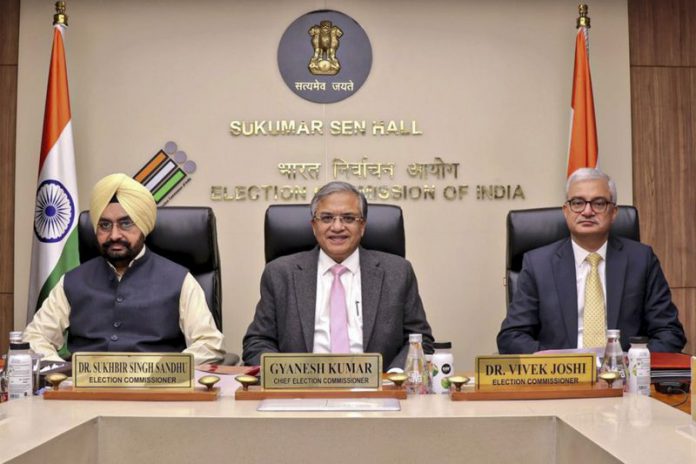
Filed by Deputy Election Commissioner Bhanu Prakash Yeturu, the affidavit stated that it has been approved unanimously by the CEC and two Election Commissioners Sukhbir Singh Sandhu and Vivek Joshi.
Denying the petitioner’s allegations that CEC Kumar unilaterally took SIR-related decisions despite objections from two other Election Commissioners, the Commission said files go first to one Election Commissioner, then to the other and finally to the CEC.
A suggestion, observation or query by any Election Commissioner during this process does not constitute a decision of the Election Commission under Section 18 of the Chief Election Commissioner and other Election Commissioners (Appointment, Conditions of Service and Term of Office) Act, 2023, it said, adding in urgent cases, the members give their approval electronically, and it’s recorded on file later.
However, it said action will be taken against officials who issue orders without approval of the competent authority.
Questioning the maintainability of the petitions, the EC said that the petitions were based solely on a single newspaper report and were not maintainable.
“In the eyes of law, a newspaper report is not treated as evidence of the facts it narrates. The Commission has neither released nor authorised the release of any internal note/file to any news agency,” the EC submitted.
The EC also listed decisions to smoothen the SIR process and help voter inclusions. Voters whose names could not be mapped with previous electoral rolls would not ordinarily be required to attend hearings in person, it said and Booth Level Officers would collect the necessary documents from their homes and upload them to the ECINet platform for consideration by the Electoral Registration Officer (ERO).
Hearings would be required only in exceptional cases and should preferably be conducted online, it said.
Regarding ECINet, the Commission clarified that no name could be added to or deleted from electoral rolls, except on an order passed by the competent ERO.
A committee comprising experts from IIT-Madras and IISc-Bengaluru has been constituted to examine compliance with applicable requirements and review the platform’s functioning, the poll panel submitted.