
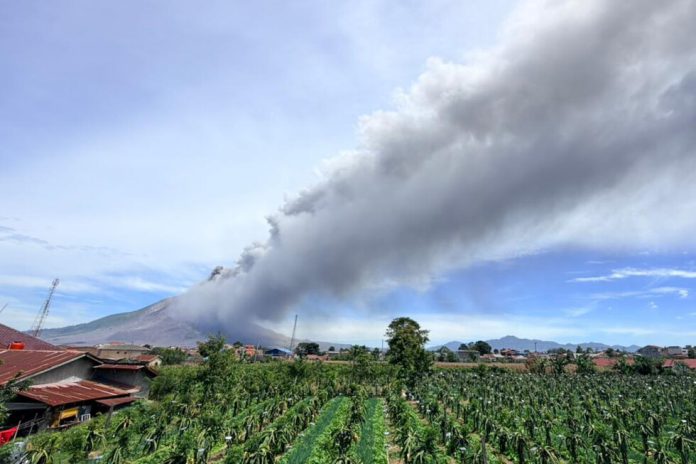
JAKARTA — Mount Sinabung on Indonesia’s Sumatra island erupted on Monday, sending a column of dark ash and smoke approximately 3,500 metres—or nearly 11,500 feet—into the atmosphere.
No casualties or immediate disruption to commercial flights were reported. However, volcanic ash covered roads, homes and other buildings in the surrounding Karo district, prompting authorities to distribute protective masks.
Indonesia’s Geological Agency raised Sinabung’s alert status to “Watch,” the second-highest warning level. Residents and tourists have been instructed to remain at least six kilometres from the crater because of the possibility of additional eruptions, ash clouds and fast-moving volcanic material.
Monitoring teams had recorded increased volcanic earthquakes and other signs of activity earlier in August. More than 30,000 people have been displaced by Sinabung’s previous eruptions.
Why it matters: Sinabung is located in a populated region, and a larger eruption could force mass evacuations, disrupt aviation and damage agriculture across northern Sumatra.