
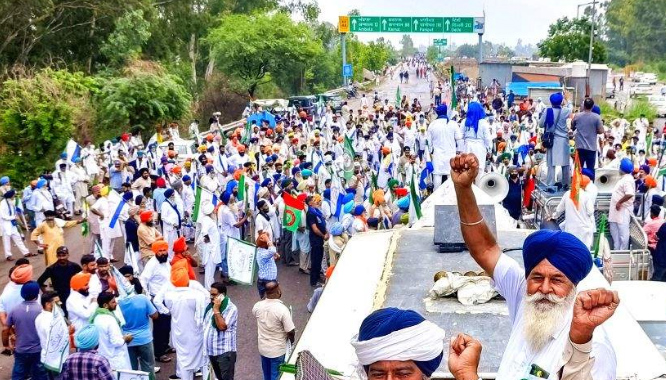
Farm organizations fear that further tariff concessions could expose Indian agriculture and dairy producers to cheaper, subsidized American imports
SHAMBHU/AMBALA, July 22, 2026 — Hundreds of farmers travelling from Punjab to New Delhi were stopped at the Shambhu border after Haryana authorities sealed the interstate crossing ahead of a planned demonstration against an expanded India–United States trade agreement.
The farmers had intended to participate in a Kisan Mahapanchayat at Kisan Ghat in Delhi. The gathering was organized under the banner of the Desh Bachao Morcha, a coalition involving several agricultural and social organizations.
Haryana Police installed barricades and concrete blocks near the bridge over the Ghaggar River and deployed additional personnel at the Punjab–Haryana boundary. Authorities in Ambala also imposed prohibitory orders, citing security and public-order concerns.
The restrictions prevented buses, tractors and other vehicles carrying protesters from proceeding toward Delhi. Farmer leaders criticized the blockade, maintaining that they intended to participate in a peaceful and constitutionally protected demonstration.
Why are farmers protesting?
Participating organizations fear that additional concessions in India’s trade negotiations with Washington could lower tariffs on American agricultural products and expose Indian farmers to greater competition.
They argue that American agriculture benefits from larger farms, extensive mechanization and substantial government support. Indian agriculture, by comparison, is dominated by small and marginal holdings with higher vulnerability to price fluctuations.
Farmer groups are particularly concerned about possible concessions involving dairy products, soybean oil, animal-feed ingredients, fruits, nuts and other agricultural commodities. They say an increase in lower-priced imports could depress domestic prices and affect farmers, agricultural labourers, livestock owners and small businesses.
The protesters have also raised concerns about intellectual-property protections, seed rights, digital trade and government procurement. These remain claims about the potential scope and effects of continuing negotiations, rather than confirmed provisions of a newly finalized agreement.
Government says sensitive products remain protected
The Indian government has rejected claims that it has abandoned the interests of farmers. Commerce Minister Piyush Goyal previously said approximately 90% to 95% of Indian agricultural products were protected under the existing interim trade framework.
According to the government, sensitive sectors and products—including dairy, rice, wheat, poultry and several fruits and vegetables—were excluded from major concessions in that framework.
Farm organizations remain unconvinced and are demanding the publication of detailed product lists, tariff commitments and proposed provisions before any broader agreement is finalized. They have also called for a debate in Parliament and formal consultation with agricultural stakeholders.
Protest campaign set to expand
Before the Delhi march, farmer organizations held motorcycle rallies across Punjab and submitted memoranda demanding greater transparency in the negotiations.
Organizers claimed that hundreds of unions and civil-society groups had been invited to participate in the Kisan Mahapanchayat. That participation figure represents an organizers’ claim and has not been independently confirmed.
After being stopped at Shambhu, some protesters remained near the border and continued their demonstration. Farmer organizations warned that the agitation could expand nationally if the government proceeded without addressing their concerns.
The Samyukt Kisan Morcha separately announced countrywide protests and urged President Droupadi Murmu to seek parliamentary scrutiny of India’s international trade commitments.
Status: Confirmed protest and border closure. The broader trade negotiations remain politically contested. Claims about future harm to agriculture are projections made by farmer organizations, while the government maintains that sensitive farm products remain protected.