
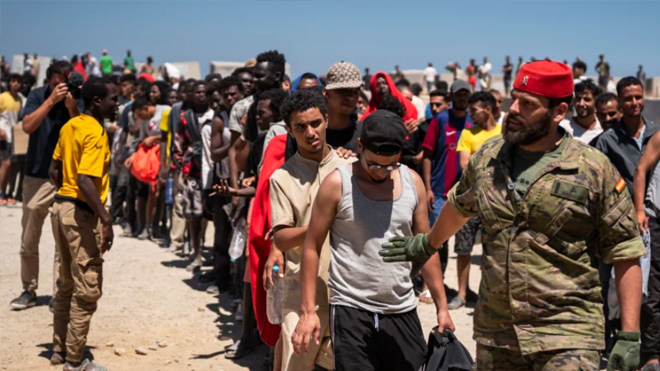
CEUTA/BRUSSELS, August 4, 2026 — Thousands of migrants remain in Spain’s North African territory of Ceuta following an unprecedented mass crossing from Morocco that overwhelmed local shelters and emergency services.
Ceuta’s regional government estimates that between 3,000 and 5,000 people remain in the territory. The city is also processing 862 unaccompanied minors, who are entitled to additional legal protections and cannot be subjected to automatic removal.
Spanish officials say approximately 69,500 people have returned to Morocco since the crisis began, although Moroccan authorities have provided a lower estimate for the original number of crossings. Hundreds of people have been sleeping on beaches because formal reception centres lack sufficient space.
Officials have recorded 72 deaths on the Spanish side and 11 on the Moroccan side. Some people drowned, while others were reportedly crushed near the breakwater and border barriers. The differing national figures and circumstances surrounding some deaths remain under examination.
Spain and Morocco have blamed misinformation, trafficking networks and confusion about a Spanish court ruling for encouraging the crossings. The European Union is considering additional technical and financial support for Morocco, while its interior ministers discuss a coordinated response.
Why it matters: The emergency is the first major test of the EU Migration Pact since its implementation in June. It is also intensifying disagreements over border controls, asylum rights, responsibility for unaccompanied children and burden-sharing among European governments.