
Washington cites cybersecurity and infrastructure concerns as technological competition with Beijing intensifies
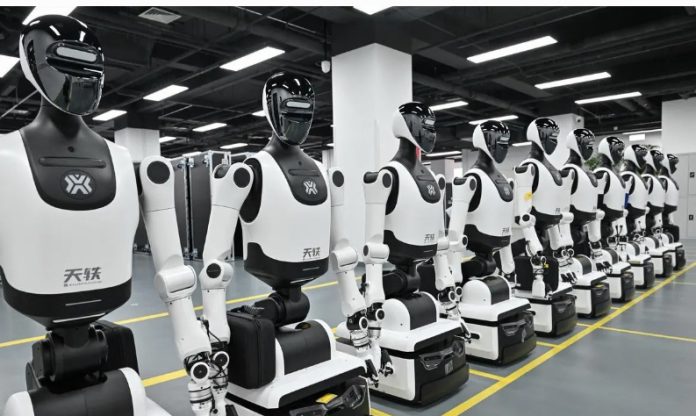
WASHINGTON, July 29, 2026 — The Trump administration has introduced restrictions preventing newly developed Chinese humanoid robots, four-legged robotic systems and connected power inverters from receiving authorization for import and sale in the United States.
The measures are being implemented through the Federal Communications Commission. The agency is responsible for approving equipment that connects to American communications networks or uses radio frequencies.
U.S. officials say Chinese-made network-connected robots could collect sensitive information, map industrial facilities or create opportunities for remote interference. Similar concerns have been raised about power inverters, which control electricity moving between solar panels, batteries, data centres and public power grids.
The restrictions are expected to affect future products from companies including Unitree, Huawei and Sungrow. Unitree is a prominent producer of humanoid and quadruped robots, while Huawei and Sungrow are major suppliers of inverters used in solar-energy systems.
Products previously authorized in the United States are not necessarily removed immediately. However, the FCC retains authority to review or revoke existing approvals if regulators identify a national-security risk.
Chinese manufacturers and Beijing have frequently rejected American security allegations as politically motivated attempts to restrict competition. A detailed response to the latest rules was not immediately available.
The decision comes as Washington seeks to expand domestic production of robots, energy equipment and artificial-intelligence infrastructure. American policymakers are also trying to reduce dependence on Chinese supply chains following earlier disputes involving semiconductors, telecommunications equipment and rare-earth minerals.
The policy could benefit American and non-Chinese manufacturers, but it may also increase costs for businesses that currently depend on competitively priced Chinese components.
Why it matters: Robots and power inverters are becoming essential to advanced manufacturing, renewable energy and AI data centres. Restrictions affecting those sectors could reshape global supply chains and deepen the technology confrontation between the United States and China.