
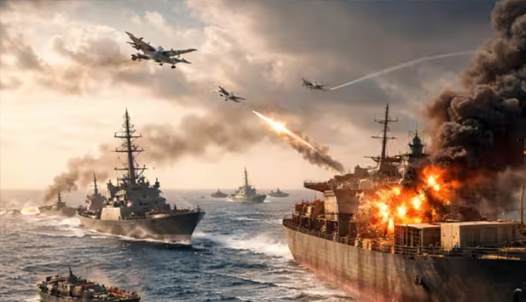
WASHINGTON/TEHRAN, August 4, 2026 — Uncertainty over efforts to end the five-month U.S.–Iran conflict has increased after Washington claimed negotiations were taking place while Tehran denied that any talks or meetings had been arranged.
President Donald Trump described the diplomatic effort as Iran’s final opportunity to reach an agreement. He also repeated a warning of a major military response if Tehran rejected the proposed settlement.
Iranian Foreign Ministry spokesperson Esmaeil Baghaei said no negotiations with Washington were underway or scheduled. According to Tehran, its only current discussions concern an Oman-mediated proposal for managing commercial passage through the Strait of Hormuz.
The security situation around the strategic waterway remains unstable. The United Kingdom Maritime Trade Operations agency reported that a commercial vessel approximately 37 kilometres northeast of Al Khasab, Oman, had broadcast that it was struck by an unidentified projectile. Responsibility for the reported incident was not immediately established.
Oil prices initially fell sharply after Trump suspended planned attacks, but recovered partially as doubts about negotiations increased. Brent crude rose to approximately $84.89 a barrel early Tuesday after falling 7% during the previous session.
Before the conflict, roughly one-fifth of global crude-oil and natural-gas shipments passed through the Strait of Hormuz. Shipping companies are also confronting longer voyages and higher insurance expenses because of security concerns around the Red Sea and Bab el-Mandeb.
Why it matters: Without a verified diplomatic process, the risk of renewed military escalation remains high. Any major disruption in Hormuz could affect energy supplies, transportation costs and inflation worldwide.