
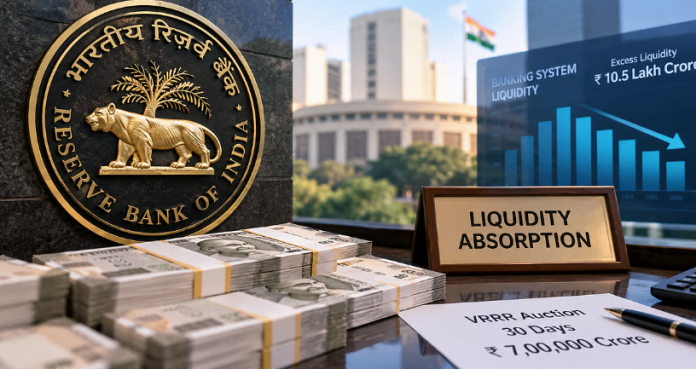
The Reserve Bank of India’s recent market operations have reduced surplus liquidity in the country’s banking system by more than half following an extraordinary inflow of overseas deposits.
According to figures reported by Reuters, surplus liquidity declined from a record ₹11.16 trillion to approximately ₹4.92 trillion, equivalent to about US$51.36 billion. This represents a reduction of nearly 55% within about two weeks.
The excess cash accumulated after Indian banks raised approximately US$133 billion through an RBI-supported diaspora deposit programme. Because such a large liquidity surplus can contribute to inflation and weaken the transmission of monetary policy, the central bank has been withdrawing money from the banking system through several measures.
During the past week, the RBI sold government bonds worth ₹750 billion and planned an additional ₹250-billion sale. Banks also deposited around ₹3.4 trillion with the central bank through reverse-repurchase operations. Market participants estimated that the RBI conducted foreign-exchange swaps of approximately US$1 billion per day over ten trading sessions, although the central bank did not officially confirm that estimate.
The operations do not freeze NRI deposits, reduce customers’ account balances or change the agreed terms of individual deposits. They are liquidity-management measures conducted between the RBI and commercial banks.
Some economists expect the RBI to consider interest-rate increases beginning in October, but this remains a market forecast. The central bank has not announced such a rate increase.